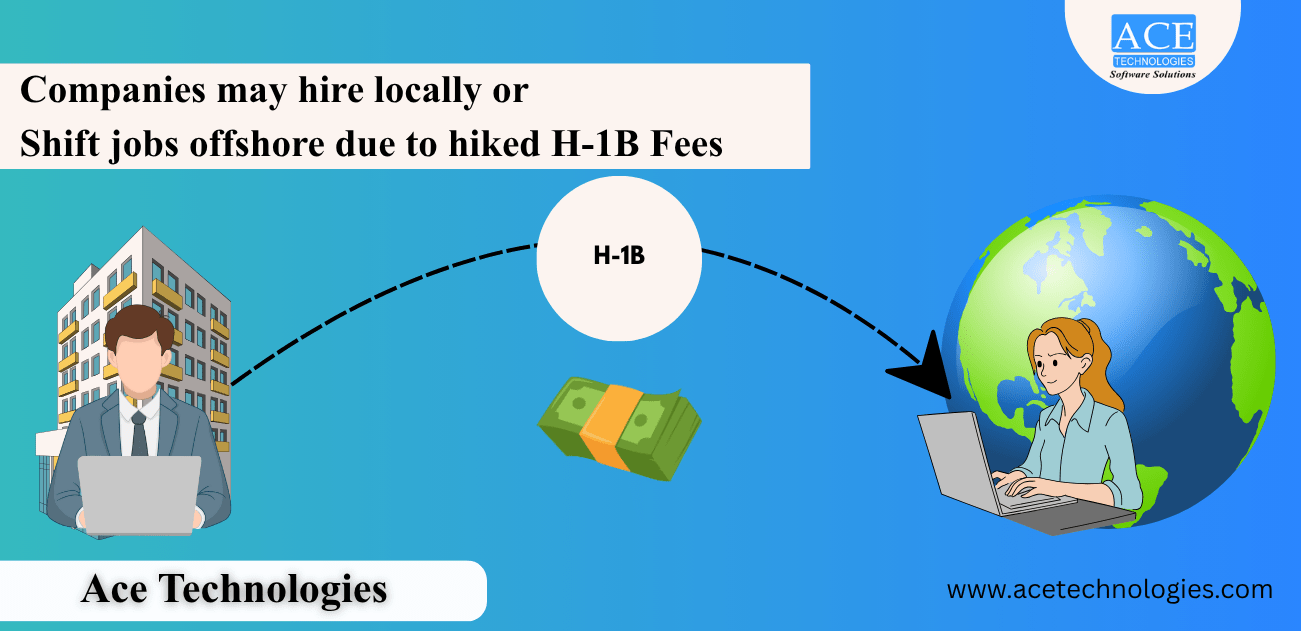
How U.S. Companies Can Overcome H-1B Visa Challenges with Offshore Hiring?
For decades, the H-1B visa has been the backbone of U.S. tech hiring, helping companies bring in specialized talent from abroad. But with only 85,000 visas issued annually and demand exceeding 750,000 applications in recent years, that system has become a roadblock.
Tech firms—especially startups—are stuck waiting for months or facing rejections, all while projects stall and innovation slows. That’s why many U.S. companies are reevaluating their hiring practices. Instead of fighting through red tape, they’re building offshore teams—a faster, more flexible way to access top talent without visa limitations.
The H-1B Visa Bottleneck
The H-1B visa allows U.S. employers to hire foreign professionals in specialized roles, especially in tech, engineering, and analytics. But as the global demand for these skills skyrockets, the system can’t keep up.
The Numbers Tell the Story:
Annual Cap: 85,000 visas (including 20,000 for advanced degree holders)
Applications in FY 2024: Over 7,50,000
Average Approval Rate: Around 80%, but dropping each year
Even approved companies face months-long processing delays and unpredictable lotteries. According to USCIS, nearly 60% of applicants in 2024 didn’t receive selection notices due to the random draw.
For growing companies, that uncertainty translates into delayed projects, lost clients, and rising recruitment costs.
“When we lost two H-1B candidates mid-project, our entire product launch got delayed,” said a CTO of a San Jose-based fintech startup. “That’s when we realized we needed an offshore team to stay on track.”
Offshore Hiring: The Practical Alternative
Offshore hiring allows companies to employ skilled professionals outside the U.S., bypassing visa restrictions entirely. These teams operate remotely—either through direct contracts, offshore development centers, or staffing partners—allowing businesses to continue scaling regardless of H-1B caps.
Why Offshore Hiring Works
Access to a larger talent pool: Skilled engineers, data scientists, and developers in India, Poland, and the Philippines are available without immigration barriers.
Faster onboarding: No need for visa sponsorship or relocation.
Significant cost savings: Gartner estimates offshore staffing can cut labor costs by 25–40% while maintaining productivity.
“The global talent pool is no longer a luxury—it’s a business necessity,” said Michael Adams, HR strategist at TechBridge Global.
Key Differences Between H-1B Sponsorship and Offshore Hiring
How U.S. Companies Can Overcome H-1B Challenges with Offshore Hiring (visa-free hiring)
Building offshore teams is more than a workaround—it’s a long-term growth strategy. Here’s how successful U.S. tech firms are doing it:
1. Identify Roles Suitable for Offshore Work
Not every position needs to be on-site. Roles in software engineering, AI/ML, data analytics, network security, DevOps, and ServiceNow can easily be handled remotely. Start with project-based work, then scale into full-time global teams.
2. Evaluate Global Talent Markets
Top offshore hiring destinations include:
India: A Massive pool of IT and cloud specialists.
Philippines: Strong English proficiency and customer support expertise.
Poland & Romania: Skilled in data engineering and enterprise software.
Understanding local time zones, communication skills, and cultural fit helps teams integrate smoothly.
3. Build a Hybrid Workforce Model
Many U.S. companies now mix onshore and offshore staff—a “follow-the-sun” model that keeps projects moving 24/7. With strong collaboration tools (Slack, Jira, Zoom) and clear project documentation, distance becomes an advantage, not a barrier.
Step-by-Step Plan to Establish/Hire an Offshore Developer Team
Step 1: Assess Offshore Readiness
Evaluate your internal processes, communication tools, and leadership adaptability. Offshore success depends less on geography and more on how prepared your company is to manage distributed teams.
“Offshore hiring works best when your workflows are already digital,” notes hiring consultant Sarah Lin. “If you can run daily stand-ups on Slack, you’re ready.”
Step 2: Choose the Right Location
Prioritize regions with strong talent pipelines and stable legal systems. India and Eastern Europe lead in software expertise, while Southeast Asia offers support roles and back-office operations.
Step 3: Pick the Right Engagement Model (nearshore vs offshore development)
Direct hiring: Full control, best for long-term roles.
Outsourcing partner: Ideal for project-based needs.
Employer of Record (EOR): Handles payroll, compliance, and HR in local markets.
Step 4: Streamline Recruitment and Onboarding
Write clear job descriptions, set up technical assessments, and onboard new hires through video training and collaborative tools. A structured start ensures alignment across time zones and cultures.
Legal and Compliance Considerations
Hiring globally introduces compliance and tax complexities—but they’re manageable with the right framework.
Employment Laws:
Each country has its own labor standards, contracts, and notice periods. Partnering with an experienced EOR or local agency helps ensure compliance.
Tax Implications:
Establish proper payment structures to prevent double taxation or unintentional permanent establishment issues.
Data & IP Protection:
Secure NDAs, data policies, and code ownership clauses from day one. Many U.S. firms use VPNs, ISO-certified vendors, and country-specific data safeguards to protect sensitive assets.
Managing Offshore Teams Successfully
Managing teams across continents can be challenging—but with the right structure, it’s smooth and productive.
Communication
Use consistent tools (Slack, Microsoft Teams, Zoom) and set core overlapping hours for real-time collaboration.
Culture
Bridge cultural differences through team-building activities, video check-ins, and transparent communication.
Performance
Set measurable KPIs and use performance dashboards to ensure accountability. Many successful companies use Agile frameworks to maintain progress visibility.
“So instead of waiting on a lottery, smart U.S. companies are rewriting the playbook — by hiring offshore.”
Conclusion: The Future of Global Tech Hiring
The H-1B visa process isn’t likely to get simpler anytime soon. But U.S. companies don’t need to wait in line to access global talent. Offshore hiring has proven to be more than a backup plan—it’s a growth engine.
By building distributed teams, startups and enterprises alike can scale faster, stay cost-efficient, and maintain innovation regardless of visa outcomes.
In today’s world, talent isn’t bound by borders—only by strategy.
“So are you ready to bypass H-1B delays? Build your offshore team with the world's top tech staffing agency, USA Ace Technologies — start in under 48 Hours.”-
FAQ
What are the alternatives to H-1B visas for U.S. tech firms?
Offshore hiring is one of the most practical alternatives. It allows companies to tap global talent directly without immigration barriers and Ace technologies could be the right choice.
How does offshore staffing solve H-1B visa restrictions?
It removes dependency on the U.S. immigration process entirely by hiring teams outside the country.
What should companies do when H-1B visas are denied?
Partner with offshore development centers or staffing firms to fill critical roles quickly.
How can startups avoid H-1B bottlenecks with global teams?
Startups can hire offshore developers or work with remote staffing agencies to scale efficiently.
Can offshore teams replace H-1B-sponsored roles?
In most cases, yes. Offshore teams can deliver equal or higher productivity with better cost efficiency.
Author Profile:

Bishal Anand
Bishal Anand is the Head of Recruitment at Ace Technologies, where he leads strategic hiring for fast-growing tech companies across the U.S. With hands-on experience in IT staffing, offshore team building, and niche talent acquisition, Bishal brings real-world insights into the hiring challenges today’s companies face. His perspective is grounded in daily recruiter-to-candidate conversations, giving him a front-row seat to what works, and what doesn’t in tech hiring.
(0) Comments